
1. SECOND ADMINISTRATIVE REFORMS COMMISSION (2nd ARC): Impact on Economy
The 2nd ARC (2005–2009) aimed to overhaul public administration in India. It produced 15 thematic reports covering a wide range of reforms. Here are key domains and their economic implications:
A. Institutional Restructuring and Revamping of Public Institutions
Reform Focus:
- Rationalize Ministries and Departments into clear functions—policy-making, regulation, and service delivery.
- Dismantle redundant boards and commissions.
- Encourage autonomy and accountability through performance agreements (MoUs).
Economic Impact:
- Reduces bureaucratic inefficiencies and duplications.
- Streamlines investment clearance, environmental permits, and project implementation—crucial for infrastructure and industry.
- Enables faster fiscal disbursements and public-private partnership execution.
B. Civil Services Reform
Reform Focus:
- Introduction of merit-based lateral entry at senior positions.
- Shift from seniority to performance-based promotion.
- Continuous training and development (Mission Karmayogi-type initiatives today mirror this vision).
Economic Impact:
- Injects technocratic expertise into government—beneficial in sectors like finance, technology, law, trade, and climate.
- A more agile and skilled bureaucracy leads to better formulation and execution of economic policies and regulatory frameworks.
- Ensures time-bound delivery of industrial reforms, trade policies, ease of doing business initiatives.
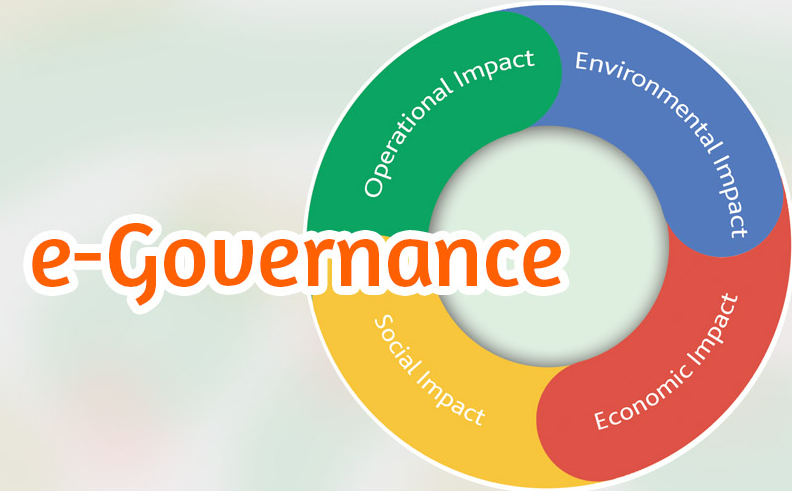
C. E-Governance
Reform Focus:
- Suggests ‘National E-Governance Plan’ (NeGP) and sector-specific digitization (like eProcurement, eTaxation, land records).
- Recommends digital identity systems (precursor to Aadhaar), biometric authentication, and digitized grievance mechanisms.
Economic Impact:
- Minimizes corruption and leakages in subsidies (e.g., LPG, MNREGA through DBT).
- Boosts efficiency in tax collection (GSTN, income tax e-filing), customs processing (ICEGATE), and licenses (single-window portals).
- Builds foundational infrastructure for fintech, e-commerce, and digital health.
D. Public Financial Management and Budget Reform
Reform Focus:
- Shift to accrual-based budgeting (from cash-based).
- Performance budgeting with Output-Outcome Monitoring Frameworks (OOMF).
- Consolidated Fund Management and Treasury Single Account (TSA) model.
Economic Impact:
- Enables better tracking of government spending and returns (RoI).
- Curbs fiscal indiscipline and improves creditworthiness of the government.
- Attracts long-term investment (e.g., sovereign and pension funds) in public infrastructure.
E. Citizen-Centric Governance and Grievance Redressal
Reform Focus:
- Legal backing for time-bound grievance redressal.
- Suggests Lokpal and Lokayuktas with real powers.
- Promotes Right to Information and proactive disclosure.
Economic Impact:
- Reinforces investor confidence by creating a transparent and predictable regulatory environment.
- Helps consumers and MSMEs quickly resolve service-related issues with banks, electricity boards, and licensing authorities.
- Strengthens rule of law, a key indicator in global Ease of Doing Business metrics.
2. NITI AAYOG – THINK TANK WITH EXECUTIVE FUNCTION
Formed in 2015, NITI Aayog replaced the Planning Commission and reshaped policy strategy with an outcome-based, cooperative federalism model.
A. Three-Year Action Agenda and Vision Documents
Focus:
- Sector-wise targets (agriculture reform, logistics cost reduction, skilling, etc.).
- Medium-term roadmaps aligned with Sustainable Development Goals (SDGs).
Economic Impact:
- Creates alignment between centre and states—ensuring joint ownership of economic goals.
- Helps prioritize high-impact projects like irrigation (PMKSY), road (Bharatmala), health (PM-JAY).
- Results in better fund utilization and multi-stakeholder coordination.
B. State-Level SDG Index and Competitive Federalism
Focus:
- Ranking of States on 100+ SDG indicators (poverty, clean water, education, energy, etc.).
- Promotes inter-state competition in governance.
Economic Impact:
- States are incentivized to adopt best practices and policy reforms.
- Improves human capital (education, health), sustainability, and rural economy productivity.
- Helps track progress for global investors and ESG-focused funds.
C. Atal Innovation Mission (AIM)
Focus:
- Establishes Atal Tinkering Labs (ATL) and Atal Incubation Centres (AIC) to foster innovation in schools, colleges, and startups.
- Encourages AI, robotics, IoT, and biotech-based entrepreneurship.
Economic Impact:
- Expands India’s innovation ecosystem—critical for job creation, exports, and technological self-reliance (Atmanirbhar Bharat).
- Increases startup density in Tier 2 and Tier 3 cities—driving regional development.
D. Development Monitoring and Evaluation Office (DMEO)
Focus:
- Conducts data-driven assessments of government schemes.
- Promotes evidence-based policymaking.
Economic Impact:
- Avoids wasteful spending.
- Promotes sunset clauses on poorly performing schemes.
- Encourages outcome-focused budgeting and investment planning.
3. CITIZEN CHARTER AND RIGHT TO SERVICE: Administrative Simplification
A. Citizen Charter Principles (1997 onwards)
Focus:
- Display of service standards, time frames, user obligations.
- Accountability for delays and redress mechanisms.
Economic Impact:
- Reduces uncertainty for businesses (in obtaining clearances, permits, licenses).
- Cuts down rent-seeking and dependency on middlemen.
- Enhances productivity by removing bureaucratic roadblocks.
B. Right to Public Services Acts in States
Examples: Madhya Pradesh (2010), Bihar (2011), Delhi (2011), etc.
Focus:
- Makes timely delivery of services (like birth certificates, caste certificates, utility connections) a legal right.
- Penalizes public servants for delay or non-delivery.
Economic Impact:
- Empowers citizens and MSMEs.
- Improves human capital documentation needed for credit, jobs, and social mobility.
- Builds trust in the governance apparatus.
C. Integration with Digital Platforms
Examples: CPGRAMS (Centralized Grievance Redress System), UMANG, MyGov.
Economic Impact:
- Citizens and entrepreneurs can submit complaints, track progress, and offer feedback.
- Reduces compliance burden and travel costs.
4. OTHER LANDMARK GOVERNANCE INTERVENTIONS
A. Right to Information Act, 2005
- Empowers citizens with access to government records.
- Forces bureaucratic accountability.
- Increases investor confidence in contract enforcement and public procurement.
B. GST Council & GSTN
- Harmonizes indirect tax structure.
- Enhances supply chain efficiency and reduces compliance burden.
- Boosts interstate commerce and formalization of the economy.
C. Insolvency and Bankruptcy Code (IBC), 2016
- Ensures time-bound corporate debt resolution.
- Unlocks stressed capital and strengthens credit markets.
- Reduces NPAs and restores banking sector health.
D. IndiaStack and Digital Governance
- Aadhaar, eKYC, DigiLocker, UPI, etc.
- Catalyzes fintech revolution, improves credit access, and expands formal economy.
- Government services become platformized and scalable.
ECONOMIC VALUE OF GOOD GOVERNANCE: SYNTHESIS
| Governance Lever | Economic Benefit |
| Digitization | Reduces delivery cost, time & corruption |
| Transparency | Boosts trust → more investment |
| Decentralization | Localized decision-making → responsive policies |
| Performance Monitoring | Results-based allocation of resources |
| Citizen Participation | Informed feedback → course corrections |
SUPREME COURT JUDGEMENT:
1. Vineet Narain v. Union of India (1998) 1 SCC 226
Theme: Institutional accountability and autonomy of investigative agencies.
Key Holdings:
- Mandated the establishment of the Central Vigilance Commission (CVC) with statutory status.
- Directed that appointments of CBI Director be made by a high-powered committee.
- Insulated investigative agencies from political interference.
Impact on Governance and Economy:
- Strengthens institutional integrity, a key parameter in foreign investment and business environment.
- Reinforces checks and balances, leading to better enforcement of economic offenses (corruption, fraud, embezzlement).
2. Union of India v. Association for Democratic Reforms (2002) 5 SCC 294
Theme: Right to know and electoral accountability.
Key Holdings:
- Recognized the citizen’s right to know about criminal, educational, and financial background of election candidates.
- A form of participatory democracy and ethical governance.
Impact:
- Helps voters make informed choices → better quality of legislators → stronger policymaking.
- Sets precedent for disclosure norms for public appointments and elected representatives.
3. T.S.R. Subramanian v. Union of India (2013) 15 SCC 732
Theme: Civil service reforms and bureaucratic accountability.
Key Holdings:
- Civil servants should not act on oral instructions from political executives.
- Government should establish a Civil Services Board for transfers and postings.
- Ensures tenure security for public servants to reduce political pressure.
Impact:
- Echoes 2nd ARC’s recommendation of a professional, meritocratic bureaucracy.
- Reduces administrative arbitrariness, improving policy stability and economic governance.
4. Manohar Lal Sharma v. Principal Secretary (2014) – Coal Block Allocation Case
Theme: Transparency and fairness in resource allocation.
Key Holdings:
- Declared allocation of coal blocks between 1993–2010 as arbitrary and illegal.
- Emphasized transparent, competitive, and fair allocation of natural resources.
Impact on Governance:
- Reaffirmed principle that natural resources are public assets and should be used for public benefit.
- Led to major economic policy changes including auctions for coal and spectrum.
5. Common Cause v. Union of India (2017) 9 SCC 499 – Public Appointment Transparency
Theme: Transparency in public sector appointments.
Key Holdings:
- Appointments to statutory and constitutional bodies must follow transparent and merit-based procedures.
- Favours institutional integrity over political loyalty.
Impact:
- Promotes professionalization in governance.
- Ensures that regulators (SEBI, RBI, CAG, etc.) operate independently → market confidence and economic stability.
6. Subramanian Swamy v. Union of India (2016) 7 SCC 221 – Right to Clean Governance
Theme: Challenge to Section 6-A of the DSPE Act.
Key Holdings:
- Struck down the provision requiring government permission to investigate senior bureaucrats.
- Held that equality before law must prevail, even for senior officials.
Impact:
- Strengthens anti-corruption mechanisms.
- Supports fair and impartial investigation → improves public trust → boosts investment confidence.
7. Rajbala v. State of Haryana (2016) 2 SCC 445 – Local Governance
Theme: Minimum educational qualification for Panchayat candidates.
Key Holdings:
- Upheld the validity of educational qualifications as eligibility criteria for Panchayat elections.
- Reinforces standards in local self-governance institutions.
Impact:
- Pushes professionalism and competence in grassroots governance.
- Better execution of rural development and welfare schemes → rural economic improvement.
8. Mazdoor Kisan Shakti Sangathan (MKSS) cases & PUCL v. Union of India
Theme: Right to Information and accountability.
Key Holdings (PUCL 2003, 2013 cases):
- Right to Information is part of Article 19(1)(a)—freedom of speech and expression.
- Right to food, work, and transparency in welfare delivery.
Impact:
- Led to formalization of RTI Act (2005) and social audits.
- Facilitates transparency in economic schemes like MNREGA, PDS, pensions.
9. Centre for Public Interest Litigation v. Union of India (2012) – 2G Spectrum Case
Theme: Governance and resource allocation.
Key Holdings:
- Cancelled all 2G licenses issued in a non-transparent, first-come-first-served basis.
- Asserted that public assets must be allocated via fair and transparent auctions.
Economic and Governance Impact:
- Institutionalized competitive bidding for spectrum and natural resources.
- Boosted public revenue, reduced crony capitalism, and strengthened regulatory oversight.
10. Olga Tellis v. Bombay Municipal Corporation (1985) – Right to Livelihood
Theme: Socioeconomic rights and inclusive governance.
Key Holdings:
- Recognized the right to livelihood as part of Article 21 (Right to Life).
- Protection against arbitrary eviction of pavement dwellers.
Impact:
- Legal foundation for inclusive economic policies, slum redevelopment, and urban governance frameworks.
- Reinforces rights-based development and poverty alleviation programs.
Summary: How These Judgments Shape Governance & Economy
| Principle Enforced by Judiciary | Economic Impact |
| Transparency in public appointments | Attracts talent and improves institutional credibility |
| Competitive allocation of resources | Enhances revenue, deters cronyism |
| Administrative independence | Improves policy execution and investor confidence |
| Citizen’s right to information | Reduces corruption and inefficiencies in service delivery |
| Accountability in civil service | Makes bureaucracy responsive and outcome-focused |
| Judicial activism in public interest | Corrects policy failures and enhances constitutional governance |
Way Forward to Strengthen Governance for India’s Economy
1. Institutionalize Performance and Accountability Frameworks
India should move beyond policy recommendations to legally binding frameworks that enforce accountability and performance management in governance. This includes strengthening institutions like the Civil Services Board and Lokpal with statutory backing and operational independence.
- International Best Practice:
Countries like Singapore have highly meritocratic civil services with clear performance-linked promotion systems and strict anti-corruption agencies (e.g., CPIB) that operate transparently and efficiently. India could adopt similar binding accountability norms with independent oversight.
2. Expand Digital Governance Infrastructure
While India has made significant progress with Aadhaar and UPI, there remains scope for expanding a unified digital public infrastructure (DPI) that integrates all citizen services—health, education, social welfare, tax, land records—on a seamless platform.
- International Best Practice:
Estonia’s e-Residency and digital governance ecosystem provide almost all government services online, with blockchain security and minimal bureaucratic intervention. India could build interoperable, decentralized digital IDs for various sectors, improving ease of access and reducing corruption.
3. Legislate Citizen Charter and Service Delivery Standards
Citizen Charters are voluntary in most places in India; making them statutory with enforceable time-bound service standards and penalties for non-compliance would institutionalize citizens’ rights.
- International Best Practice:
Countries like the UK and New Zealand have statutory service charters that compel public bodies to meet quality standards, backed by independent ombudsmen and judicial review. India could legislate the Right to Timely Public Service Delivery as a fundamental governance mandate.
4. Promote Participatory Governance and Social Audits
Empowering citizens through participatory budgeting, social audits, and local governance feedback loops enhances transparency and accountability.
- International Best Practice:
Brazil’s participatory budgeting model has been lauded for improving municipal governance by involving citizens directly in fiscal decisions. India can scale up models like the MGNREGA social audits by institutionalizing participatory budgeting at state and urban local body levels.
5. Strengthen Regulatory and Judicial Oversight
Creating specialized, autonomous regulators with judicial powers (e.g., for environmental clearances, telecom, finance) ensures technical expertise guides decision-making with reduced political interference.
- International Best Practice:
The US Federal Reserve and Securities and Exchange Commission (SEC) operate with independent statutory mandates, maintaining market confidence. Similarly, independent administrative tribunals with quasi-judicial powers can expedite dispute resolution and regulatory compliance in India.
6. Enhance Capacity Building and Leadership Development
Governance reforms must be supported by continuous training, skill development, and leadership programs for civil servants to adopt global best practices in public administration, innovation, and ethics.
- International Best Practice:
The Harvard Kennedy School and Oxford Blavatnik School of Government provide global training for civil servants. India’s LBSNAA and other training institutes should collaborate internationally to upgrade curricula focusing on technology, law, and governance ethics.
7. Implement Outcome-Based Budgeting and Data-Driven Policy Making
Shift fully towards performance-based budgeting that ties financial outlays to measurable outcomes with real-time monitoring using data analytics.
- International Best Practice:
Countries like Australia and Canada employ outcome budgeting frameworks coupled with digital dashboards that track scheme performance and public feedback. India’s NITI Aayog can evolve into a full-fledged performance management agency with state-level counterparts.
8. Strengthen Anti-Corruption Frameworks and Judicial Enforcement
Corruption undermines governance and economic growth. Strengthening anti-corruption institutions with full autonomy, protection for whistleblowers, and judicial fast-tracking of economic offenses is crucial.
- International Best Practice:
Hong Kong’s ICAC (Independent Commission Against Corruption) has successfully reduced corruption through a three-pronged approach: enforcement, prevention, and community education. India could further empower the Lokpal and CVC along similar lines.
9. Improve Centre-State Coordination with Clear Mandates
India’s federal structure requires a more cooperative model with clarity in financial and functional roles, linked to performance incentives.
- International Best Practice:
The Swiss federal system balances autonomy and cooperation with fiscal transfers tied to results, leading to efficient public service delivery. India can enhance NITI Aayog’s role as a facilitator of such cooperative federalism with realigned fiscal federalism incentives.
10. Encourage Transparency and Open Data
Mandate open government data platforms and proactive disclosure of government contracts, expenditures, and performance data to enable civil society and media scrutiny.
- International Best Practice:
The Open Government Partnership (OGP) initiative, with member countries like UK, Canada, Mexico, encourages transparency and public participation. India, a founding member, should deepen implementation of OGP commitments, leveraging open data to foster innovation and accountability.
In summary, to strengthen governance and boost the Indian economy, India should focus on legal backing for reforms, digital integration, citizen empowerment, institutional autonomy, data-driven management, and international collaboration. This will improve service delivery, reduce corruption, accelerate reforms, and create a transparent ecosystem that attracts investments and fosters inclusive growth