
CONTEXT
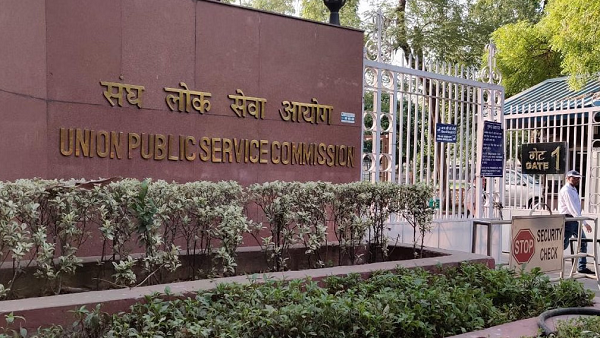
The UPSC Civil Services Examination is one of the most rigorous exams in the world. It selects India’s top bureaucrats, with less than 0.2% of applicants making it to final selection. However, thousands who clear the Prelims and Mains and reach the interview stage still remain unemployed or underutilized—despite possessing exceptional knowledge, analytical abilities, and discipline.
Recognizing this, if the Government or private sector introduces a policy to absorb UPSC interview-qualified candidates into structured roles in the private sector, it could reshape India’s approach to talent utilization.
KNOWLEDGE-BASED QUALITIES OF UPSC CANDIDATES
Candidates who reach the UPSC interview stage have developed profound qualities over years of preparation. They possess a broad and deep understanding of governance, economics, ethics, international affairs, Indian history, and constitutional law. Their knowledge is multi-dimensional and analytical.
More importantly, they demonstrate qualities like perseverance, dedication, critical thinking, self-discipline, and the ability to study and absorb vast material under stress. Their ability to explain complex societal problems with structured thinking makes them capable of engaging in public dialogue, policy development, and national planning.
They also develop excellent writing skills through essay papers and Mains exams, and oral communication skills through interviews and discussions. Ethical reasoning, social empathy, and leadership attitudes are tested explicitly through the ethics paper (GS Paper IV) and interview panel.
PRACTICAL NEEDS OF THE PRIVATE SECTOR
However, the private sector operates in a fundamentally different environment. It prioritizes quick execution, technology-driven solutions, customer satisfaction, and profit-making. It demands proficiency in tools like Excel, CRM software, analytics platforms, and project management tools. The focus is on tangible results: meeting deadlines, managing teams, acquiring clients, and optimizing operations.
Unlike government systems which are often policy-oriented, the private sector is outcome-oriented. It values professionals who can innovate on the go, adapt quickly to changing scenarios, and work collaboratively in teams. Domain-specific expertise, such as digital marketing, financial modeling, sales strategy, or software engineering, is often non-negotiable.
GAP BETWEEN KNOWLEDGE AND PRACTICALITY
This creates a natural gap. UPSC aspirants are trained to be policy thinkers, while private sector jobs often require execution experts. One is trained to analyze the impact of a government program on rural employment; the other needs to design a rural product launch plan with specific KPIs and sales targets.
So, while the UPSC aspirant may understand the underlying reasons behind a digital divide or female literacy gap in India, they may lack the practical tools to launch an ed-tech startup addressing those issues—or to measure marketing ROI and user acquisition costs.
HOW THIS GAP CAN BE BRIDGED
The key lies in building transition platforms or bridging programs that convert this intellectual potential into industry-ready capabilities. For instance:
- A 3–6 month training program that teaches UPSC interview-qualified candidates about business fundamentals, data analytics, digital tools, and teamwork.
- Internships in corporate social responsibility (CSR), public relations, policy advisory, and ESG reporting.
- Certifications in areas like project management, finance for non-finance professionals, or business communication.
- Placement cells and talent databases to connect UPSC candidates with companies looking for analytical minds, ethical grounding, and leadership skills.
With such support, these individuals can thrive in domains like consulting, think tanks, corporate strategy, HR, content development, policy advocacy, and more.
IMPACT ON PRIVATE SECTOR AND SOCIETY
For the private sector, this is a huge win. It gets access to India’s brightest minds—people who are already trained in discipline, ethics, and macro-level thinking. They may not have initial corporate experience, but they bring something rarer: a deep understanding of India’s ground realities, people’s problems, and systemic policy thinking. These are people who understand how India works, not just how business works.
For society, it means fewer frustrated aspirants, better mental health outcomes, and more productive lives. The talent pool is reused rather than wasted. Even those who don’t become IAS officers can still become change-makers, thinkers, entrepreneurs, and professionals.
PROS OF THIS POLICY CHANGE
1. Better Talent Utilization
Every year, thousands of highly knowledgeable, disciplined, and socially-aware candidates fall just short of final UPSC selection. Most of them remain unemployed, switch careers, or become disillusioned. By opening private-sector doors, this policy ensures that their talent is not wasted but rechanneled productively.
2. Enriched Private Sector
These candidates bring analytical ability, structured thinking, ethics, and a macro-level understanding of India. Private companies, especially in sectors like consulting, education, CSR, ESG, public policy, and research, benefit from this intellectual depth and social sensitivity.
3. Bridging Policy and Profit
Many industries, like healthcare, fintech, agritech, and ed-tech, now function at the intersection of policy and entrepreneurship. UPSC-trained minds can help companies navigate regulatory frameworks, implement social impact models, and build strategies aligned with national priorities.
4. Reduced Youth Frustration and Brain Drain
It gives a second chance to deserving youth who may have invested 4–6 years preparing for UPSC. Instead of facing unemployment or going abroad, they can find fulfilling careers within India, contributing to national development.
5. Cultural Exchange Between Sectors
As individuals move between government-focused and business-focused mindsets, a new culture of cooperation can emerge—where ethics meets innovation, and strategy meets social responsibility.
CONS AND CHALLENGES
1. Mismatch Between Knowledge and Skill
UPSC aspirants have deep theoretical knowledge, but private sector roles often demand immediate practical skills—data analytics, sales, digital tools, or product design. Without proper reskilling or orientation, they may struggle in fast-paced roles.
2. Expectations vs Reality
Many UPSC aspirants are motivated by public service, long-term impact, and structured authority. Transitioning into a profit-driven, hierarchical corporate culture can lead to disillusionment if not managed sensitively.
3. Dilution of Specialization
UPSC candidates are generalists by design. This may work against them in private industries that reward domain expertise—like tech, finance, or marketing—unless they pursue further specialization.
4. Resistance From Traditional Corporate HR
Some private companies may still undervalue or misunderstand the unique capabilities of UPSC candidates, especially if they don’t hold conventional MBAs, technical degrees, or corporate experience.
HOW THIS HELPS INDIVIDUAL GROWTH
This policy provides a new horizon of possibilities for UPSC interview-stage candidates. It gives them hope, a career path, and a dignified application of their effort even if they don’t clear the final list.
Instead of restarting from scratch or entering unrelated jobs, they can build careers that still align with their ideals—such as working in social impact firms, ESG strategy, legal-tech, policy consulting, or developmental finance.
It also allows for personal growth, as these individuals are exposed to entrepreneurial thinking, customer-centric innovation, and modern workplace tools. Their career becomes more dynamic, with multiple options for lateral movement or upskilling.
HOW THIS SUPPORTS ECONOMIC GROWTH
At the macro level, this change helps India maximize its intellectual capital. The economy benefits in several ways:
- Human Capital Efficiency: Every UPSC candidate represents a huge investment in learning and national consciousness. Putting that to productive use increases national economic efficiency.
- Innovation in Governance-Driven Industries: Areas like healthtech, fintech, agri-business, and ed-tech need people who understand both policy and market forces. These candidates are ideal for creating inclusive, scalable, and regulatory-compliant innovations.
- Strengthened Social Impact Ecosystem: With more educated individuals entering CSR roles, ESG planning, sustainability leadership, and nonprofit strategy, India’s development goals can be pursued more smartly and efficiently.
- Job Creation Through Entrepreneurship: Many UPSC-trained minds, when introduced to startup thinking, may become social entrepreneurs. They can create impact-driven ventures, especially in Tier 2 and Tier 3 cities, generating jobs and solving grassroots problems.
- Improved Public-Private Collaboration: With individuals who understand the workings of government now working in companies, it becomes easier for businesses to collaborate with ministries, regulators, and state departments. This reduces friction and enhances growth.
FINAL INSIGHT
This transformation marks a strategic realignment of India’s intellectual workforce. It corrects a long-standing flaw where extremely capable individuals were sidelined just because of a one-time examination result.
By moving toward a multi-sectoral, inclusive, and growth-oriented framework, India not only supports its young minds but also fuels the engines of economic innovation, social responsibility, and national progress.
With careful implementation—such as transition training, corporate awareness, and mentorship—this change can become a milestone in India’s journey from knowledge accumulation to practical excellence.
1. Build a National Talent Transition Platform
A government-supported or PPP (Public-Private Partnership) digital platform should be established to identify, train, and connect UPSC interview-level candidates with job opportunities across industries.
Key Features:
- Candidate registration post-interview stage
- Automated skill mapping and psychometric profiling
- Personalized job matching across sectors (CSR, Ed-tech, Research, Analytics, ESG, Public Relations, etc.)
- Training module suggestions based on role compatibility
This could be developed under Digital India or in partnership with platforms like NSDC (National Skill Development Corporation).
2. Launch Specialized Bridge Programs (3 to 6 Months)
Create structured reskilling and orientation programs to help UPSC candidates transition into corporate roles.
Curriculum Should Include:
- Business communication and soft skills
- Project management (Agile, Scrum basics)
- Data analysis (Excel, SQL, Power BI)
- Industry-relevant tools (CRM, productivity software, digital marketing basics)
- Problem-solving in team settings (design thinking, simulation exercises)
- Introduction to startup and innovation ecosystems
Partners: IIMs, private universities, online platforms like Coursera, UpGrad, or government bodies like NITI Aayog.
3. Corporate Awareness & Sensitization Programs
Private companies should be made aware of the value UPSC candidates bring.
Actionable Steps:
- Organize employer meets or webinars co-hosted by UPSC or government agencies and private HR associations
- Issue informational whitepapers showcasing real-world case studies of successful UPSC-to-corporate transitions
- Offer financial incentives (e.g., tax deductions or CSR credits) to companies hiring and training these candidates under defined frameworks
4. Introduce Corporate-Policy Fellowship Programs
Encourage structured fellowships that place candidates in blended roles involving both corporate exposure and public-policy interface.
Examples:
- Corporate-Government Policy Analyst Fellowships
- ESG Strategy Fellows
- CSR Impact Managers
- Public-Private Partnership Project Analysts
These should be supported by industry bodies (FICCI, CII, ASSOCHAM) and supervised by think tanks (like NITI Aayog, India Foundation, ORF).
5. Encourage Mentorship and Alumni-Led Support
UPSC alumni who have transitioned successfully into corporate roles can form a mentorship collective to guide new entrants.
Functions:
- One-on-one mentoring or group coaching
- LinkedIn communities for peer support
- Role-specific job preparation (e.g., policy consulting, development finance, management)
6. Leverage Current Trends for Practical Integration
a. Rise of ESG and CSR Roles
As companies now mandatorily spend on CSR and focus on ESG metrics, UPSC-trained individuals—who understand social impact and governance—can be a perfect fit.
b. Growth of Think Tanks and Policy Startups
India is seeing a surge in private think tanks, data-driven public policy startups, and government tech-enablement platforms. These can hire UPSC candidates for research, strategy, and stakeholder liaison roles.
c. Remote Work and Gig Economy
Hybrid and remote work allow candidates to work in research, content strategy, legal compliance, public affairs, or education content without relocating. It broadens the scope for regional candidates.
d. Ed-Tech and Content Boom
With their structured knowledge and academic orientation, UPSC aspirants can become faculty, course designers, content creators, or mentors on platforms like Unacademy, Byju’s, or niche UPSC preparation startups.
FINAL THOUGHTS
This policy is not just a welfare measure for deserving aspirants—it is a nation-building strategy. It turns lost potential into productive power. To make it feasible and future-ready, implementation must be:
- Collaborative (involving government, private players, academia)
- Practical (with skill-based and goal-oriented support)
- Scalable (digitally driven, affordable, inclusive)
- Sustainable (with mentorship and employment feedback loops)
With the right strategy, this can be the model for inclusive talent mobility in India—a bridge between intellectual capital and economic development.